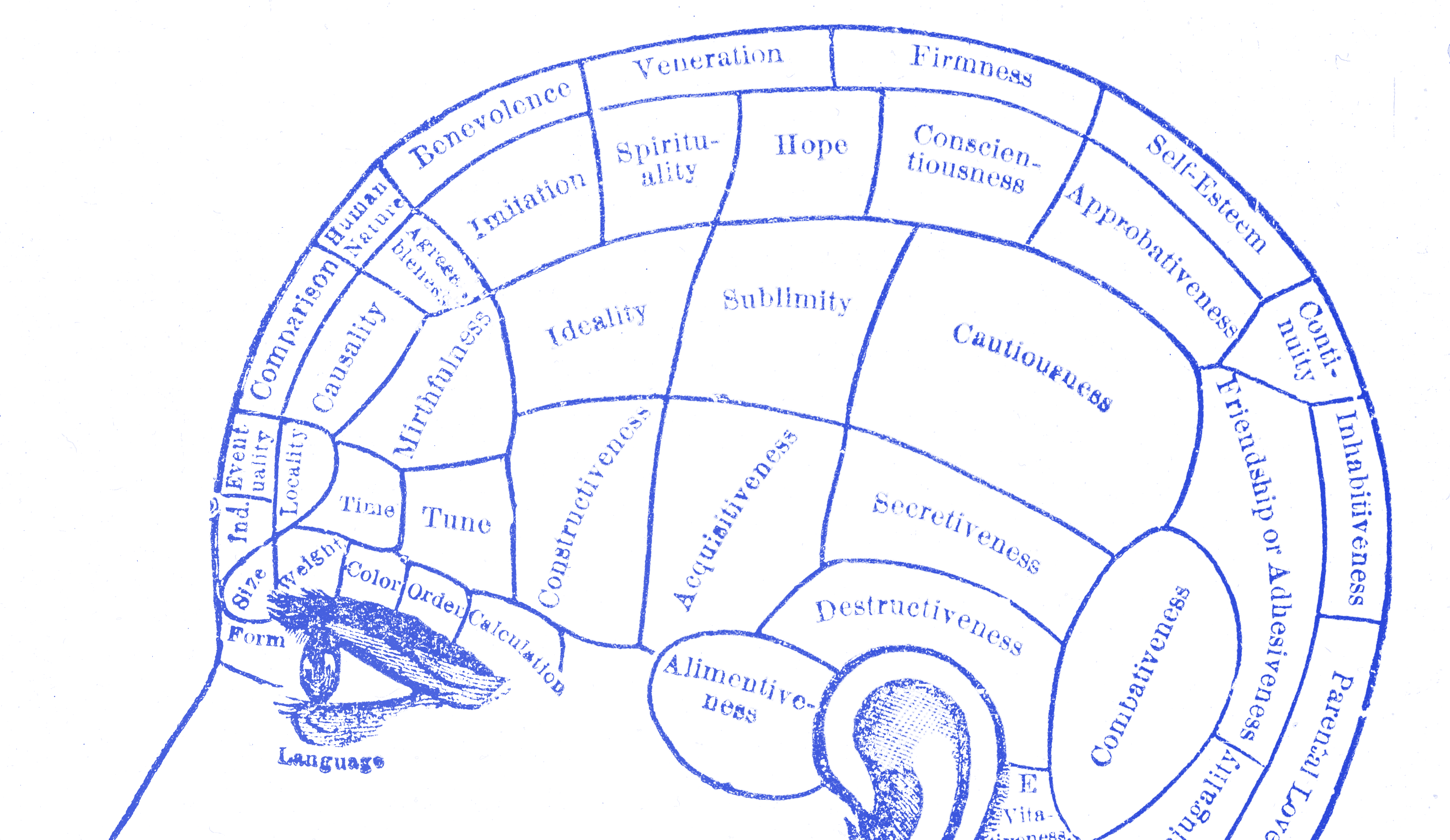
You Ruin Your Own Designs
How imposter syndrome makes you design worse products

TL;DR:
Imposter syndrome doesn't make you feel like a fraud. It makes you design like one. You play safe, over-explain, and kill the good ideas before anyone can disagree. That's not professionalism. That's just fear with a job title.
You killed a good idea last week. Maybe last month. You had a direction that felt right, the kind you get excited about for exactly one day before the doubt sets in. Then you found a reason it wouldn’t work. A technical constraint. A stakeholder concern. A story you told yourself about the user. And you moved toward something safer, something smaller, something nobody would push back on. You called it pragmatism.
It wasn’t pragmatism. It was fear with a professional costume on.
Most designers know the feeling but very few name it accurately. You sit in a room with people who seem to know exactly what they’re doing, and you wonder when someone is going to notice that you’re mostly guessing. You got the job, shipped the product, earned the praise, and none of it quite landed as proof that you belong here. Each new project feels like the one that might finally expose you. So you manage down. You protect yourself. You make the choice that’s hardest to criticize rather than the one most likely to be right.
That pattern has a name, and it has consequences that go well beyond how you feel.
What’s actually happening
In 1978, psychologists Pauline Clance and Suzanne Imes described something they’d observed across more than 150 high-achieving women: despite consistent success, these women believed they were not actually good at their jobs. They thought their accomplishments came from luck, from charming the right people, from grading errors, from a hiring committee that made a mistake. Clance and Imes called it the impostor phenomenon. The defining belief was that they were really not bright and had “fooled anyone who thinks otherwise.”
The research since then has stretched the finding far beyond its original sample. A systematic review of 62 studies covering more than 14,000 people found that the impostor phenomenon is common across genders, age groups, and professions, with prevalence rates ranging from 9 to 82 percent depending on how it was measured (Bravata et al., 2020). It shows up in doctors, engineers, academics, and designers. It gets worse during transitions: new job, new team, new kind of work. The more you care about what you do, the harder it tends to hit.
What Clance and Imes named as a feeling, Albert Bandura showed us as a behavior. Bandura spent decades studying what he called self-efficacy: your belief in your own ability to perform a specific task. His finding was not subtle. When that belief is low, people don’t just feel worse. They do less. They avoid challenging tasks before they start. They give up earlier when things get hard. They interpret setbacks as confirmation of what they already suspected, rather than as normal friction (Bandura, 1977). Low self-efficacy doesn’t live only inside your head. It shows up in your decisions.
Put those two things together and you get the actual problem. You believe, somewhere beneath your professional surface, that your past work was mostly luck. So when a difficult call comes up, you don’t trust your own read on it. You defer. You add options instead of making a choice. You run one more round of research instead of committing to a direction. You call it thoroughness. What it actually is, is a refusal to be accountable for a decision you’re not sure you’re qualified to make.
The work pays for it. Not your feelings. The work.
What it costs
Jason Fried wrote about this in Rework. The early 37signals team, building what would become Basecamp, made conservative call after conservative call because they were afraid of being exposed as amateurs playing at a level above their ability. They played safe. They hedged. When they finally shipped Basecamp despite those doubts, the market responded. The product worked. The fear had been costing them the whole time, not in how they felt, but in what they built.
The pattern is specific and recognizable. A designer who doesn’t trust their own judgment adds features to prove they’ve thought of everything. They over-explain decisions in presentations because if they can just show enough reasoning, nobody can say they didn’t think it through. They make the button blue instead of red because red is a risk and blue is fine and fine is safe and safe won’t get them fired. They avoid bold proposals. They soften every critique. They say “it depends” when they actually have an opinion.
None of those choices feel like fear in the moment. They feel like professionalism.
One question before you make the call
Valerie Young, who spent decades studying the impostor phenomenon across professional fields, found that people experiencing it tend to set up situations where they can never fully trust their own success (Young, 2011). When they do well, they attribute it to external factors. When they make a risky call and it works, they assume they got lucky again. The accumulation of evidence that you know what you’re doing doesn’t register the way it should. The internal ledger is broken.
You can’t fix that in one chapter. But you can interrupt it before it shapes a decision.
Before you kill a bold idea or choose the safe option, ask yourself one question: am I making this call because the evidence says it won’t work, or because I’m afraid of being the one who pushed it? That’s it. Not a workshop exercise. Not a framework with steps. One question. Evidence or fear. You will know the answer and you will not always like it.
Call it the legitimacy audit. It takes ten seconds and it’s the only real check on whether your professional judgment is driving the decision or your fear of exposure is. You don’t have to override the fear every time. Sometimes the safe option really is the right one. But you should at least know which force is in the room when you make the call.
Mark, a designer and founder at Superfried, a Manchester design agency, put it this way: when you’re struggling with imposter feelings, the most useful thing is to look for the concrete facts that can’t be argued away (Superfried, 2024). Not reassurances. Not affirmations. Facts. The client hired you. The team shipped the product. The thing you built actually worked. Those happened. They are evidence. The fear that arrived alongside them is not.
The work is the record
The impostor feeling doesn’t go away with success. Clance and Imes observed that “repeated successes alone” were not enough to break the cycle. The belief keeps regenerating because it’s not really about the evidence. It’s about how you interpret the evidence. And that interpretation, left unchecked, keeps shaping what you build.
The market does not grade on how confident you felt when you made the call. It only grades what you shipped.
⸻